Exeter Silicone Services
Shower resealing
Tray, base, internal corners and the foot of the screen or enclosure resealed properly, with the old joint taken right out. £95 including VAT and silicone.
£95including VAT and the silicone. The full price card
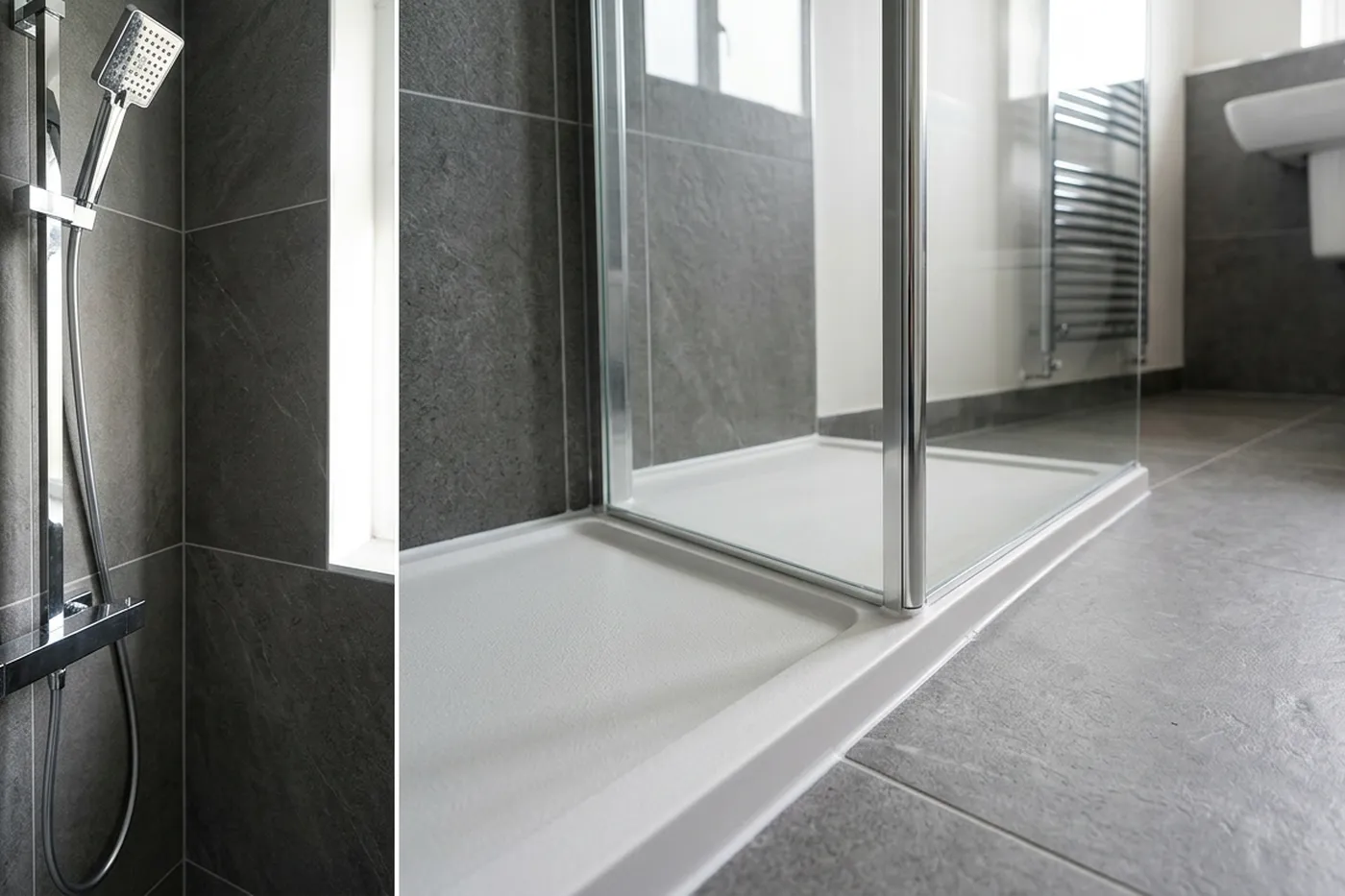
A shower is a harder job than a bath and it is the same price. It gets more water, it gets it hotter, and it gets it in the corners, which is where every enclosure fails first. A shower joint that has gone is not a cosmetic problem for long, because the water behind it is going into a floor rather than an alcove.
The work covers the tray or base joint all the way round, the internal vertical corners where the tiled walls meet, and the foot of the screen or the frame of the enclosure. Cubicles, quadrants and walk-ins are all the same job and the same price.
£95 including VAT and silicone. A bath resealed on the same visit brings the pair to £150 rather than two separate charges.
What is included
- Tray or shower base joint stripped out all the way round
- Internal tiled corners taken back and resealed
- The foot of the screen, the door frame or the enclosure profile
- Limescale cleared off the joint faces before sealing
- Sanitary grade silicone with a fungicide
- Tooled to a concave finish that sheds water instead of holding it
- Old sealant taken away and the tray left clean
Before and after
A shower corner and tray edge
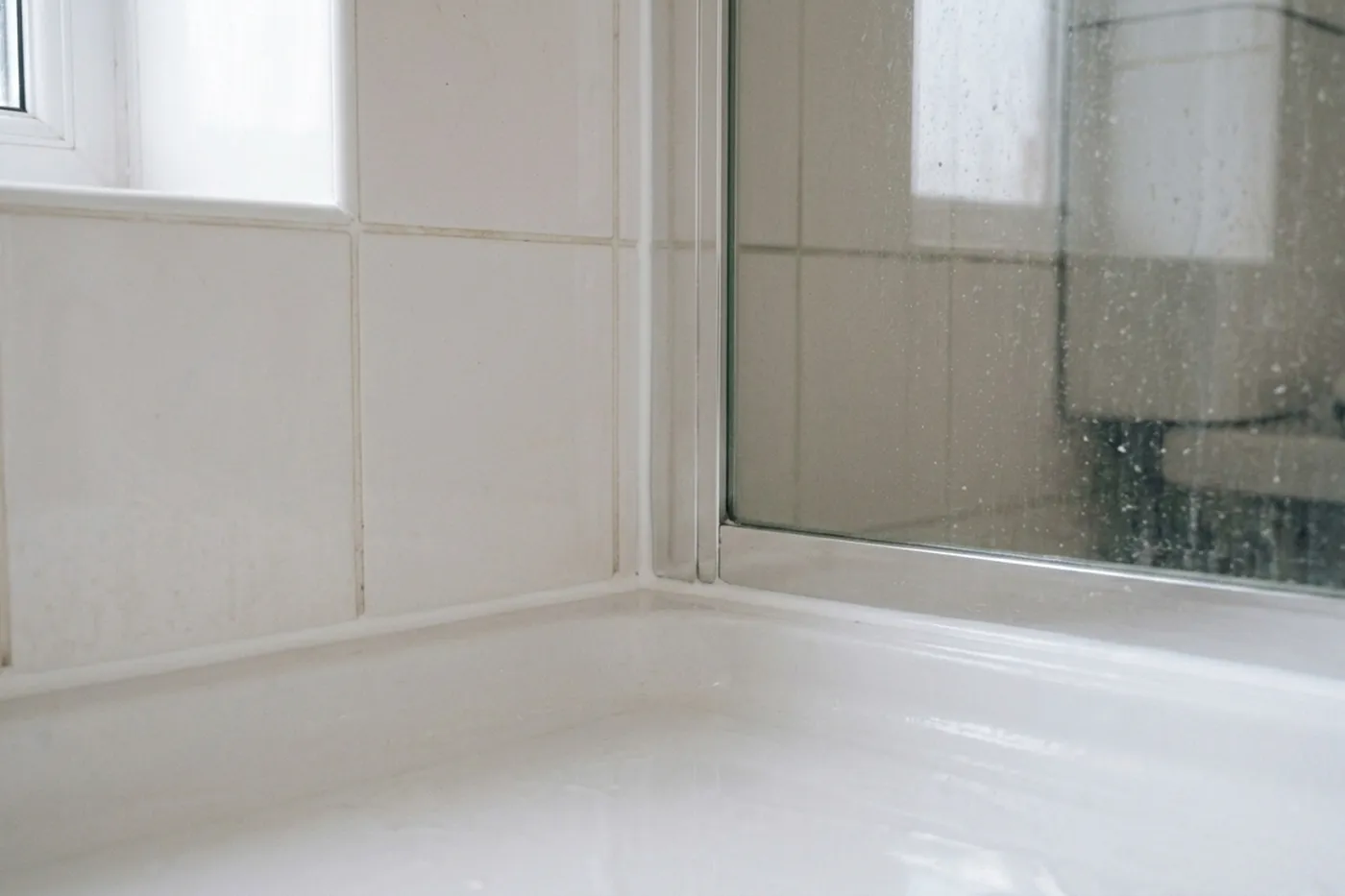
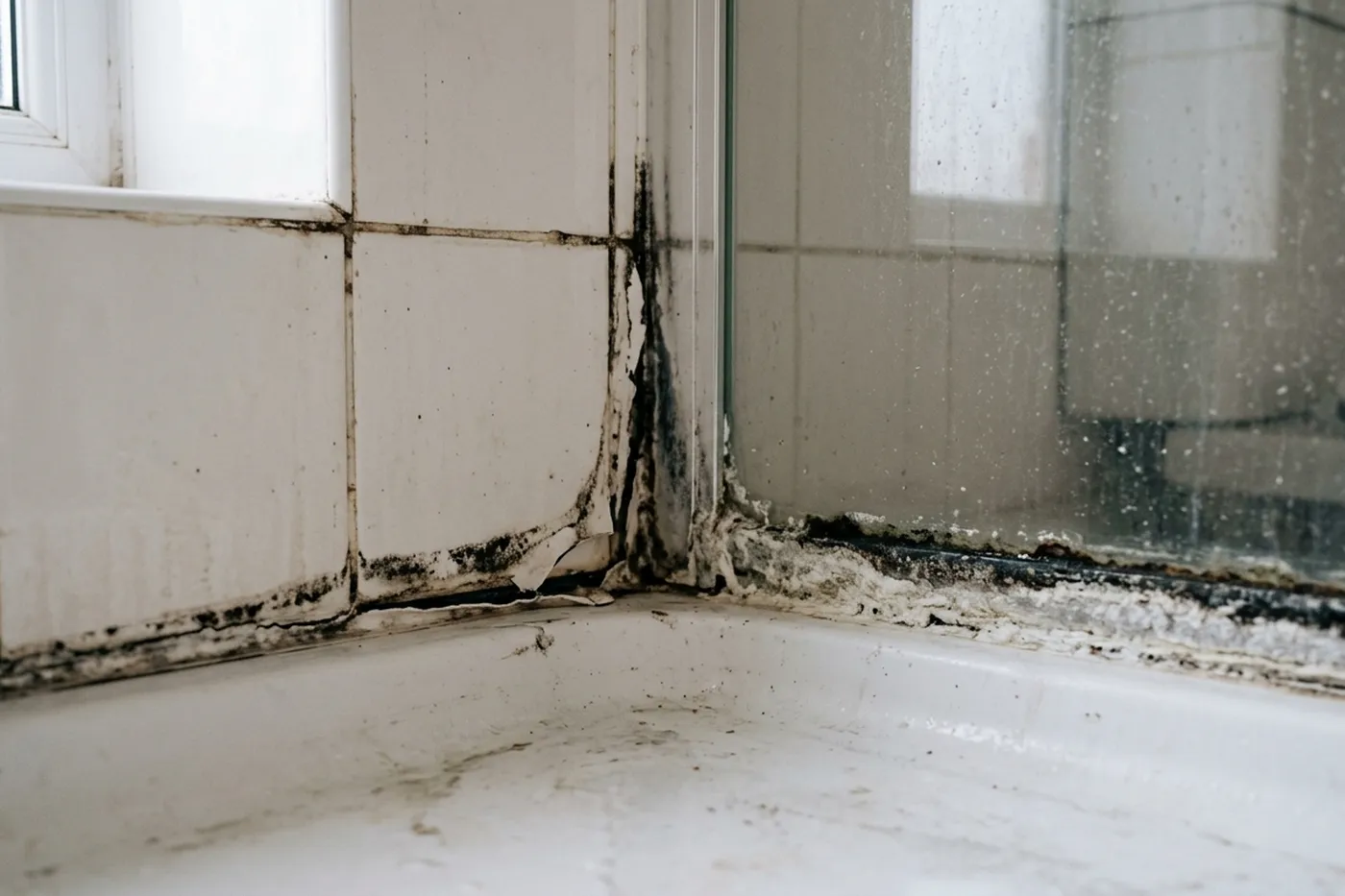
Corners are where showers fail
The vertical internal corner of a tiled shower takes running water down two planes at once and it is the joint people seal last and worst. It is also the joint that dries slowest, because it never sees moving air.
Sealed properly it wants a slightly fuller bead than the tray run, tooled to a clean hollow so water runs off rather than sitting on a flat shoulder. A corner tooled flat holds a bead of water after every shower, and a joint that is wet for an hour a day is a joint that will grow mould.
Screens, doors and the metal profile
A shower screen is sealed on the outside of the profile and left open on the inside. That is deliberate rather than a shortcut. Water that gets behind the profile has to be able to run back into the tray, and sealing both sides traps it in the channel where it sits, smells and eventually finds the floor.
The rubber seals and sweeps on a shower door are parts rather than sealant. They perish, they go brittle and they stop touching the glass, and no amount of silicone fixes that. Where one has gone you get told what it is and where it comes from, rather than having a bead run against it.
Trays that flex
A stone resin tray on a solid floor does not move. A plastic tray on a timber floor with no support underneath moves every time somebody stands in it, and that is a joint that will keep failing whatever is put in it.
Where that is what is happening you get told plainly, with what it would take to put right underneath. Hembury Contracting can price that work, and it is a better spend than a fourth bead.
Sealant is not tanking, and it is not grout
Three different things keep water inside a shower and they get confused constantly. Grout is the hard fill between tiles and it is not flexible. Sealant is the flexible joint where two different materials meet, which is why it goes round a tray and not between tiles. Tanking is a waterproof membrane behind the tiles, put in before any of it, and it is the only one of the three actually holding water back.
So a shower can be leaking through failed grout, through a failed sealant joint, or because there was never any tanking behind the tiles in the first place, and the three look identical from the doorway. A new bead fixes exactly one of them.
What tells them apart is where the water shows up. Damp on the far side of the wall or in a ceiling below usually means water is getting through the wall rather than past a perimeter joint, and no amount of silicone round the tray will change that. Where it looks like that you get told, with what would actually need doing, before any money is taken.
On the day
How a shower resealing runs
Get everything out of the way
Screen doors lifted off their rollers where they come off, shelves and racks moved, and the tray sheeted. Working round a hanging door is how a bead ends up wavy.
Cut the old joint out
Blade along the tile, plastic tool on the tray or the acrylic. Corners are done last because they are where the old material is thickest and most stubborn.
Descale and dry
A shower joint carries limescale as well as residue, and silicone bonds to scale about as well as it bonds to soap. The faces are cleaned, solvent wiped and dried before anything else happens.
Seal in order
Verticals first, then the horizontal tray run, so every joint sheds into the one below it rather than into a corner. Tooled concave, tape pulled wet.
Keep it dry
No shower for a full day. That is the only instruction, and it is the one that does most to decide how long the joint lasts: a bead that gets wet before it has cured is a bead that never reaches the strength it was going to have.
Behind the work
Kit, cover and qualifications
The work is done by Sam Hembury and the crew he trains, trading as Hembury Contracting out of Exeter. One entity, one VAT registration, one invoice.
Read what people say about Hembury Contracting

- Hembury Contracting
- Exeter Silicone Services is a service line of Hembury Contracting, Sam Hembury's Exeter business. Same trading entity, same invoices, same VAT registration.
- Public liability cover
- Insured for work in your home and in occupied rented property. A copy of the certificate goes over by email if you want to see it before booking.
- Published prices
- The price card is on the site rather than behind a form, VAT included and silicone included. You can work out what your job costs before you get in touch.
- The old joint comes out
- Every layer, plus the residue film underneath it, before anything new goes on. That is the part that takes the time and it is the part that decides how long the new bead lasts.
Shower resealing
Shower resealing questions
How long before the shower can be used?
A full day. Twenty four hours from the bead going in is the number, and a shower is the worst thing to rush because the first use puts hot water straight onto a joint that has not finished curing. If the shower is the only one in the house, say so when booking and the day can be picked around it.
Do you seal inside the shower screen as well?
No, and it is deliberate. The inside of a screen profile has to drain back into the tray. Sealing both sides traps water in the channel, which is where the smell and the eventual floor damage come from. Outside sealed, inside left to drain, is the right way round.
There is black mould in the corners. Will it come back?
Not from the new joint, because the old material and the colony inside it are removed rather than covered. What decides the next few years is ventilation. If the room has no working extractor and the window stays shut, mould will come back to the whole room, joint or no joint, and you will be told that rather than sold a bead.
Can you do a wet room?
The sealant joints in a wet room, yes: the screen, the tiled corners and the perimeter. The tanking underneath a wet room floor is a different trade and a different job, and if the problem is the tanking rather than the sealant, resealing will not touch it.
Where
Shower resealing across Exeter and Devon
- Exeter
- Heavitree
- St Thomas
- Pinhoe
- Alphington
- Ide
- Topsham
- Exmouth
- Budleigh Salterton
- Sidmouth
- Dawlish
- Teignmouth
Also on this site
The rest of what gets resealed
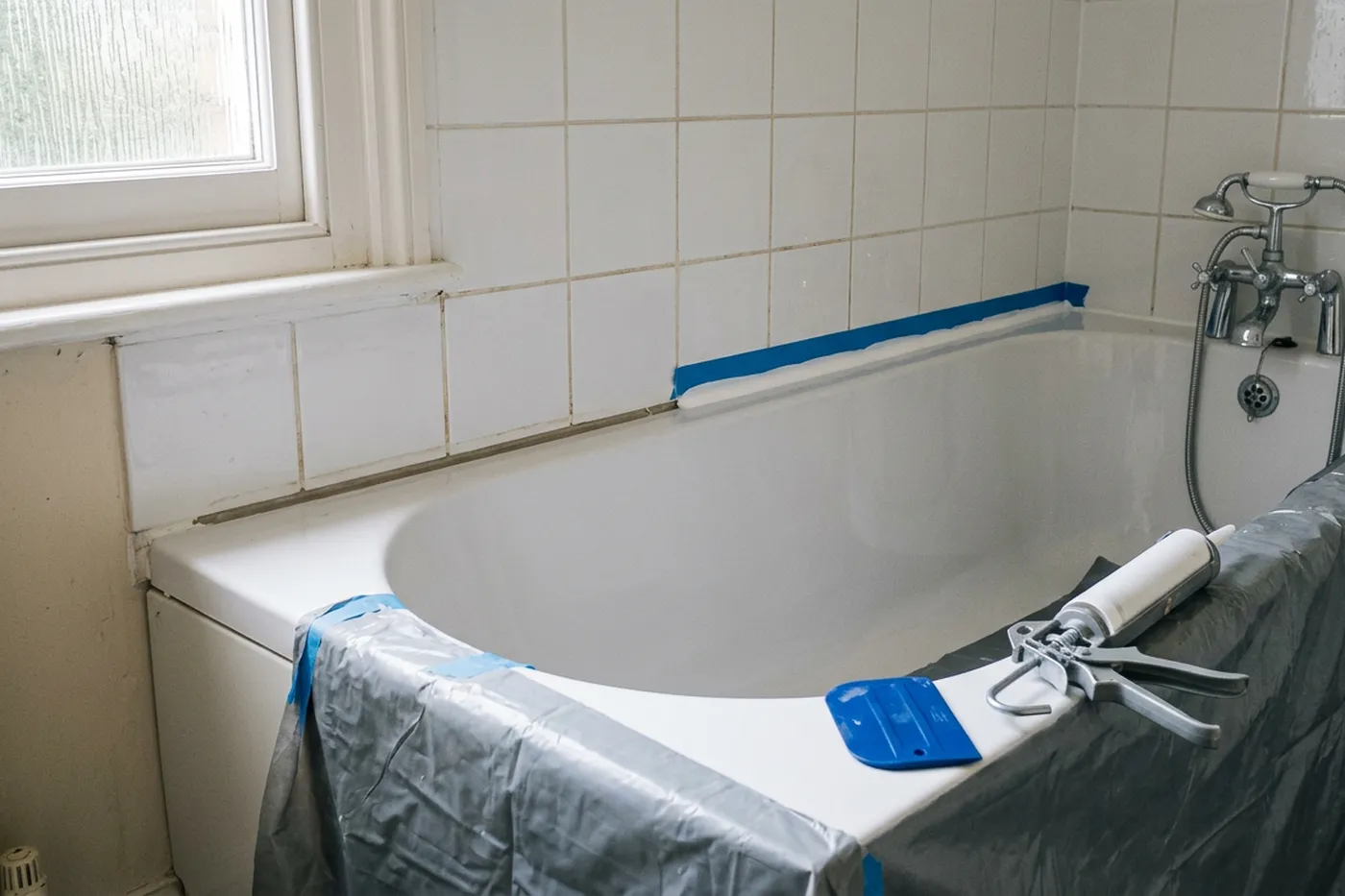 £95inc VATBath resealingThe old sealant round the bath stripped out completely, the joint cleaned back and dried, and a fresh sanitary bead run and tooled. £95 including VAT and silicone.
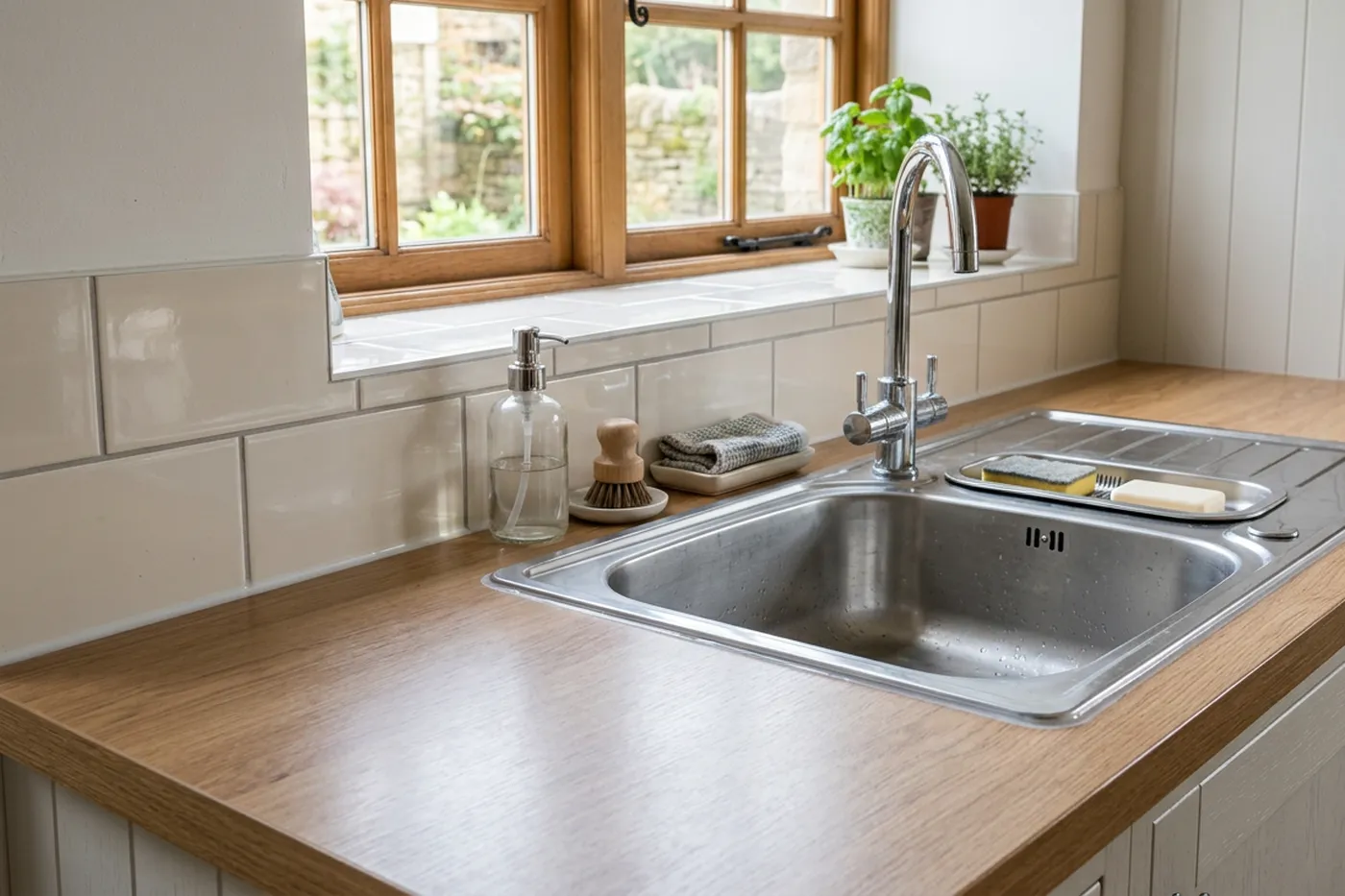 £95inc VATKitchen sealant and worktop sealingWorktop to wall joints, upstands, splashbacks and the run round an inset sink, sealed with the old line taken out first. £95 on its own.
 £95inc VATSilicone removal and replacementThe full strip out: mouldy, lifting or badly applied sealant taken out completely, the joint cleaned back to bare surfaces, and a new bead run properly.
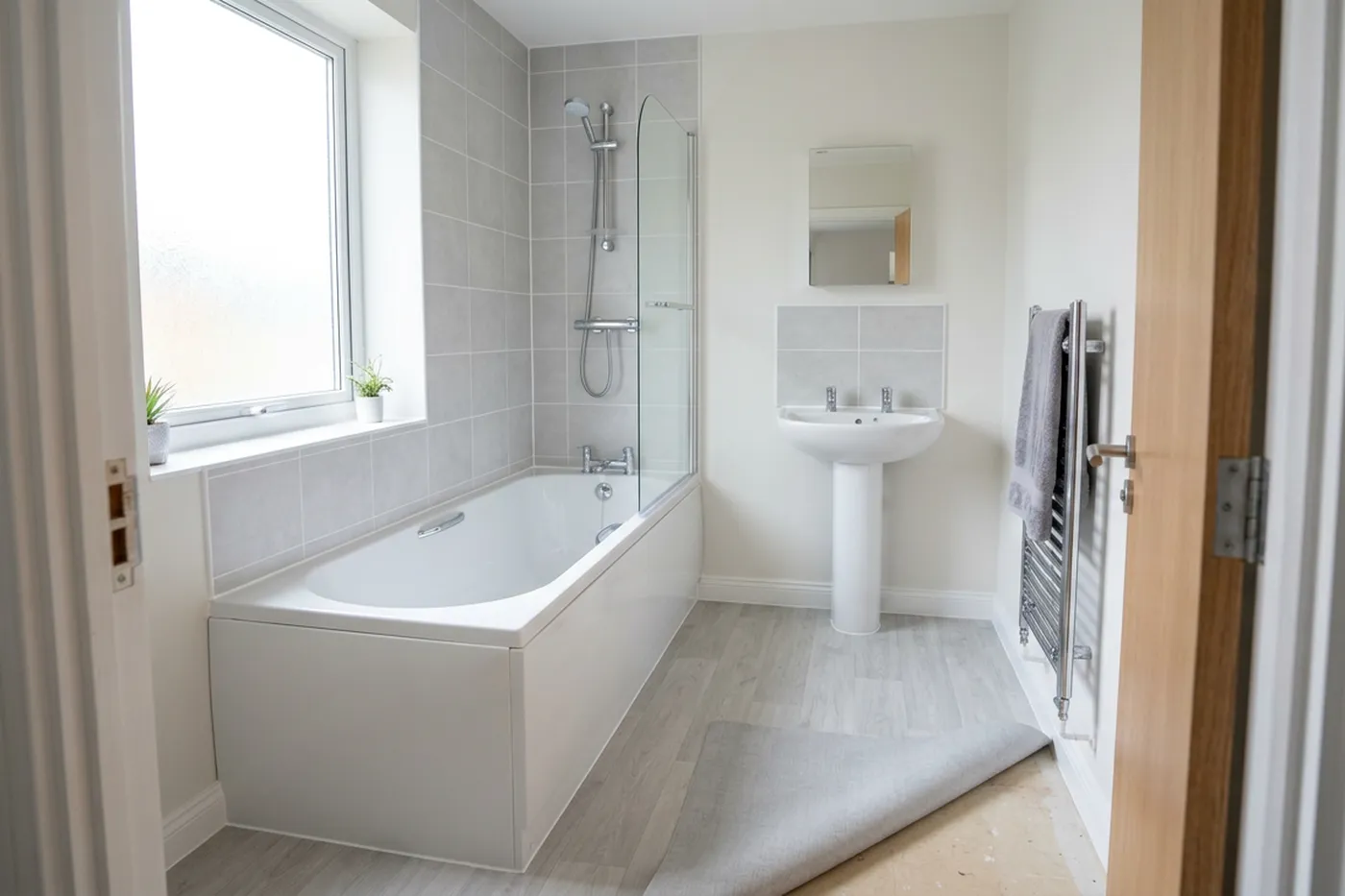 £185inc VATWhole bathroom resealingBath, shower, basin, screen and every tiled splashback run stripped and resealed on one visit. £185 including VAT and silicone.
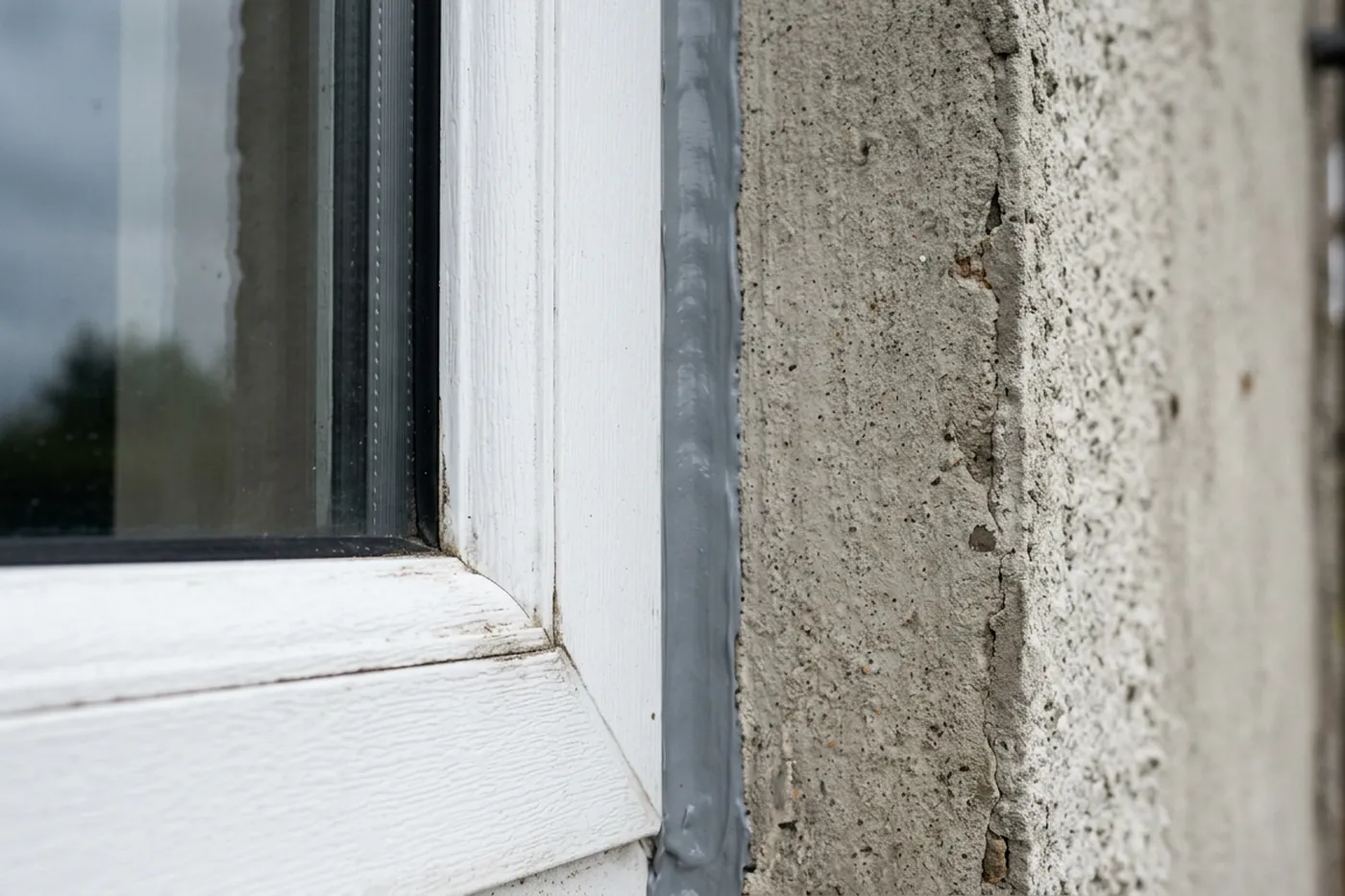 Window and door sealingPerimeter joints round window and door frames, inside and out, where the sealant has gone hard, cracked or pulled away from the frame.
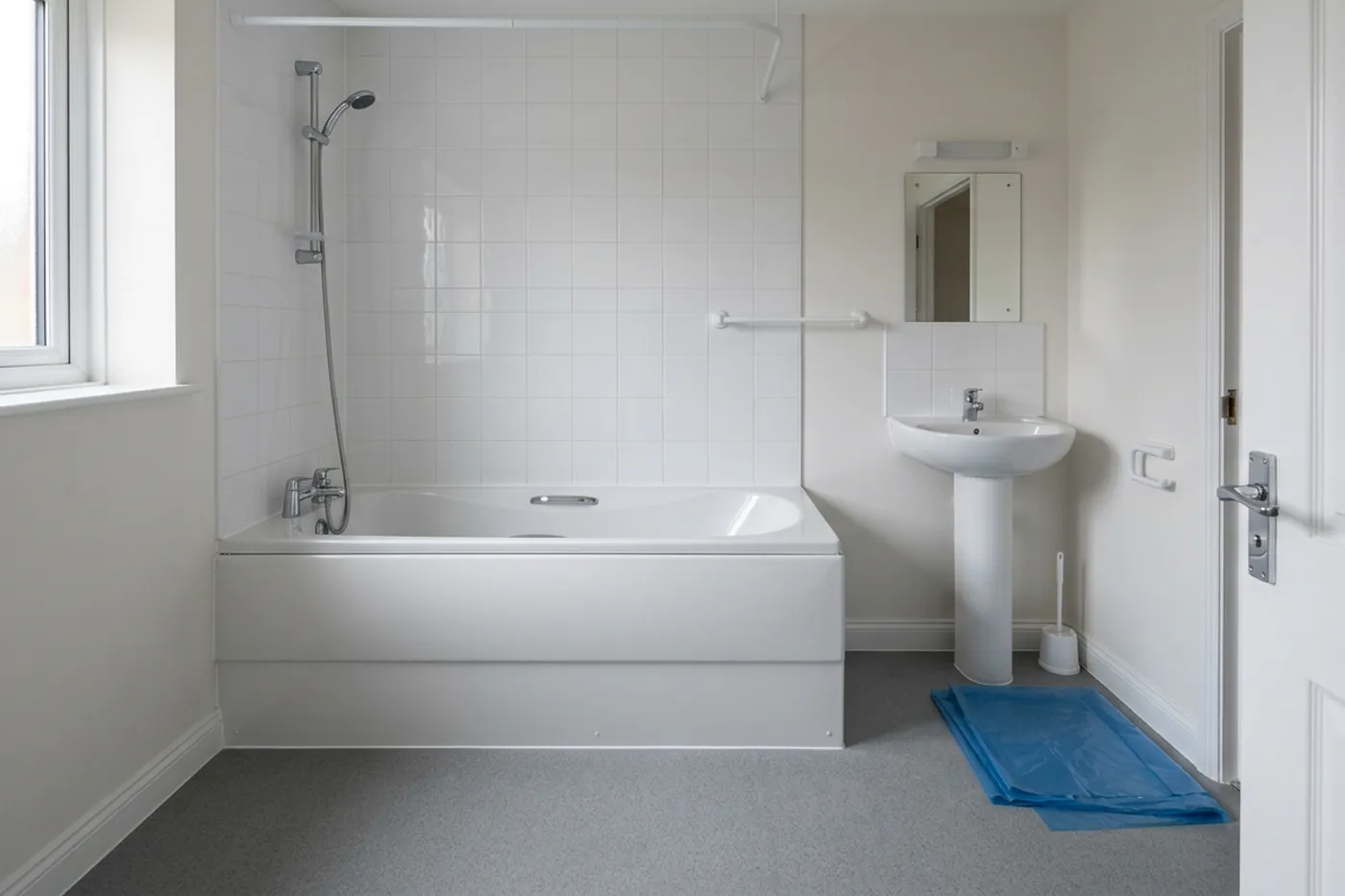 Sealant repairs for landlords and agentsBooked with the tenant, photographed before and after, invoiced to the agent or the landlord. Fixed prices per bathroom so a job can be approved without a site visit.
Get a price
Book a reseal with Exeter Silicone Services
Send a photograph of the joint and say which fittings need doing. Back comes the price off the published card and the next free slot. Ringing is quicker if you want a date fixed today.
- Bath or shower
- £95
- Both on one visit
- £150
- Whole bathroom
- £185
VAT and silicone included. Minimum charge £95.