Guide
How long does silicone take to dry, and when can you use the bath?
Touch dry in twenty minutes to an hour. Safe to put water against after a full twenty four hours. Those are two different things happening at two different speeds, and the gap between them is where joints get ruined.
If you only take one number away, take the second one. A bath run the same evening is the most common reason a new joint fails within a year.
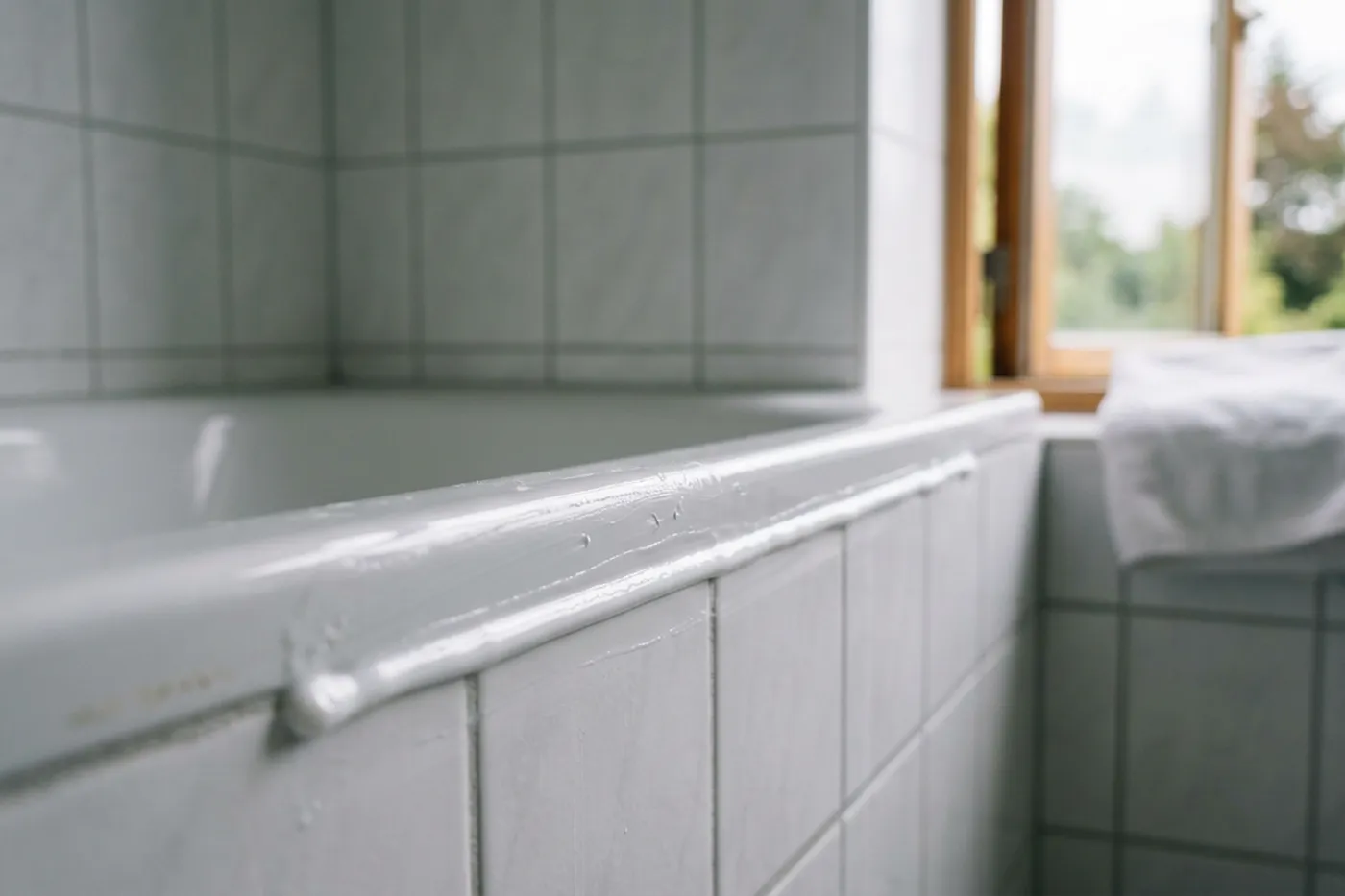
Skinning is not curing
Silicone does not dry the way paint does, by losing a solvent. It cures by reacting with moisture in the air, and it does that from the outside in. Within the first hour a skin forms on the surface, which is what people mean when they say it is dry. Underneath that skin the material is still soft.
The cure then works inwards at roughly two to three millimetres a day. A normal bath bead is deeper than that, which is where twenty four hours comes from as a rule of thumb: enough of the depth has cured for the joint to hold, take movement and resist water.
A wide or deep joint takes longer, not the same time. If a gap has been filled with a fat bead because the bath sits away from the wall, give it two days rather than one.
What changes the timing
Humidity speeds it up, because moisture in the air is the thing the reaction needs. A cold, dry room in February cures more slowly than a warm, humid one in July, which is the opposite of what most people expect.
Warmth helps, within reason. A cold bathroom slows everything down. Blasting a joint with a hairdryer or a heat gun does not: it skins the surface faster and can leave the material underneath soft for longer, and it can distort the bead.
Airflow helps, gently. Leaving the door and the window open is worth doing. Running the extractor for the first hour is worth doing. Neither of those replaces the day.
What happens if you use it too soon
Two things, and both are permanent. Hot water against an uncured bead swells and softens it, so it loses its bond to the tile at exactly the point where it needed it most, at the wet edge. It looks fine and it is already failing.
The other is movement. An acrylic bath drops by a millimetre or two when it fills, and a joint that has not cured cannot take that movement yet, so it tears internally. You will not see the tear. You will see the black line six months earlier than you should have done.
Nothing is lost by waiting. Everything is lost by not, and there is no way to tell from looking which of the two happened.
Practical timings for a real bathroom
Basin and toilet: usable within an hour of the joints being finished, because neither puts standing water against a new bead.
Shower: a full twenty four hours, and it is the one worth being strict about because the first use puts hot running water straight onto the joint. If it is the only shower in the house, book a morning slot so the curing runs overnight.
Bath: a full twenty four hours before it is filled. Wiping it out with a damp cloth after a few hours does no harm.
Kitchen worktop: wipe rather than wash for the rest of the day, and normal use the following morning.
Also asked
Related questions
Can I speed it up with a hairdryer?
No, and it can make things worse. Heat skins the surface faster while the material underneath stays soft, and it can distort the bead. Warmth and normal airflow help; forcing it does not.
It still smells of vinegar. Is that normal?
Yes. Standard sanitary silicone is acetoxy cure, and the smell is acetic acid given off as it reacts. It fades over the first day or so as the cure completes, and airing the room clears it.
How long before I can grout or paint next to it?
Leave it the full day first. Paint will not adhere to silicone at all, cured or not, so a joint that needs painting over was the wrong material for that joint in the first place.
If you would rather not
The job this article describes, done for a published price
The pages this covers
- Bath resealing
The old sealant round the bath stripped out completely, the joint cleaned back and dried, and a fresh sanitary bead run and tooled. £95 including VAT and silicone.
- Shower resealing
Tray, base, internal corners and the foot of the screen or enclosure resealed properly, with the old joint taken right out. £95 including VAT and silicone.
The other guides
- Can you reseal a bath or shower without removing the old silicone?
The short answer is no. The longer answer is about what silicone bonds to, and what is living inside the joint you would be covering up.
- Why does bathroom sealant go mouldy, and can it be stopped?
It grows inside the silicone, feeding on soap residue in a joint that never fully dries. What actually slows it down, and what makes no difference.
- Why does bathroom sealant leak, and is the sealant even the problem?
Water on the floor below a bathroom has three usual causes and only one of them is the sealant. Here is how to tell which one you have before you pay for the wrong repair.
- Which silicone should go in a bathroom, and does the type matter?
Sanitary grade, not general purpose. Acetoxy on tile and acrylic, neutral cure on stone and metal. White or clear is a choice, and everything else on the shelf is a distraction.
- How often should bathroom sealant be replaced?
There is no fixed interval. There are four signs, and a family bathroom gets through a joint considerably faster than a spare one does.
Get a price
Book a reseal with Exeter Silicone Services
Send a photograph of the joint and say which fittings need doing. Back comes the price off the published card and the next free slot. Ringing is quicker if you want a date fixed today.
- Bath or shower
- £95
- Both on one visit
- £150
- Whole bathroom
- £185
VAT and silicone included. Minimum charge £95.