Guide
How often should bathroom sealant be replaced?
Nobody can put a number on it that is worth anything, because the same silicone in the same bathroom lasts very different lengths of time depending on how the room is used and whether it is ventilated.
So this article is about the four signs instead. If none of them is there, leave it alone. If one of them is, it is due, and doing it before it leaks is the cheap version of this job.
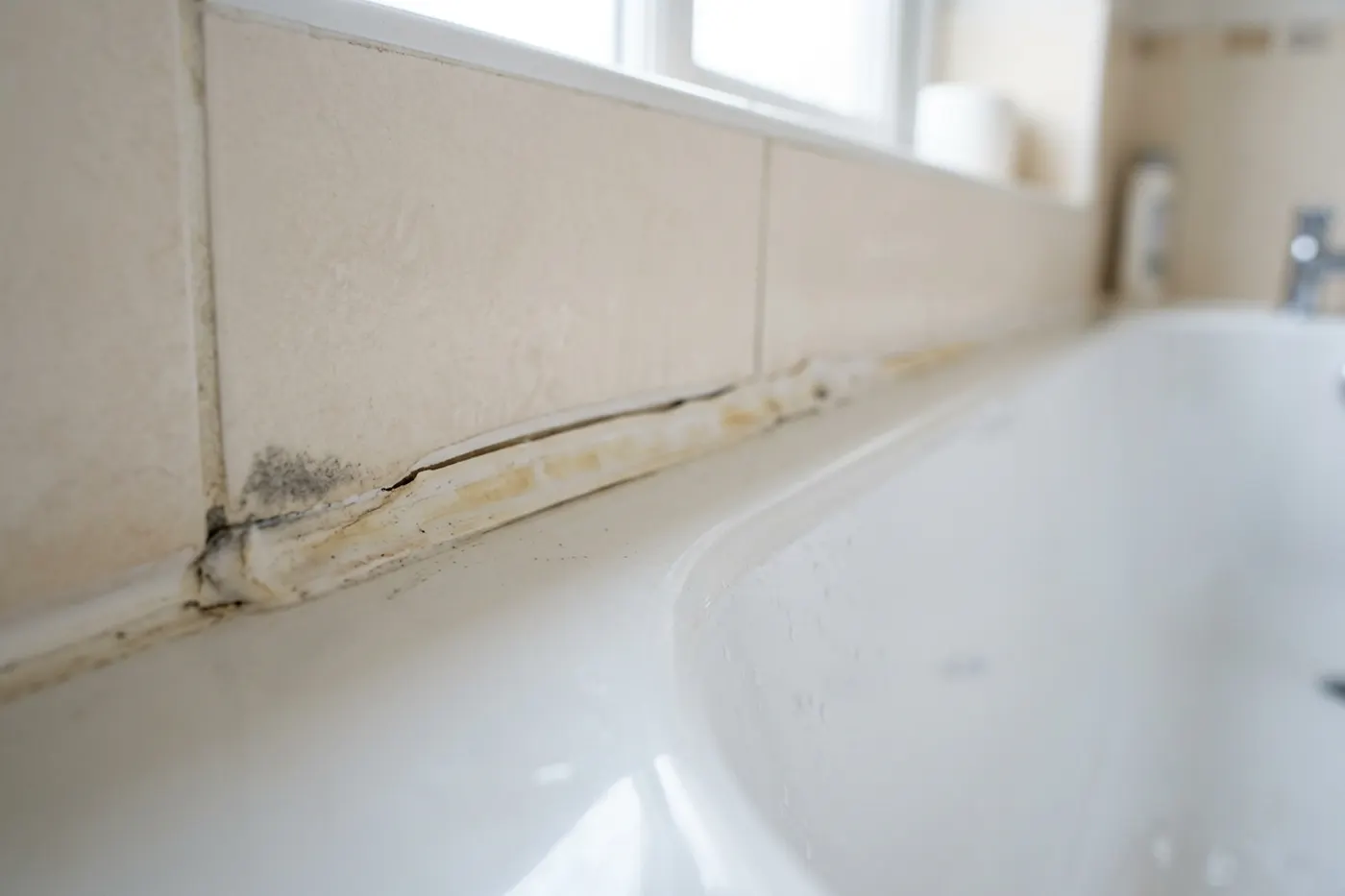
The four signs it is due
It has lifted anywhere along its length. Look along the joint at a low angle with a torch, not straight on. A hairline shadow between the silicone and the tile means water is already getting behind it, whatever the front of the bead looks like.
The black is inside rather than on top. If it stays after a clean, the mould has grown into the material and the joint has to come out. Bleach whitens the surface of a colony rather than killing it.
It has shrunk. An old bead pulls back slightly from one or both edges as the plasticisers leave it, and the tell is a fine gap at the ends before the middle.
It has gone hard. Press it with a fingernail. Fresh sanitary silicone gives; an old one is firm and slightly brittle, which means it can no longer take the movement of a bath filling and emptying and will open at the next flex.
Why the same joint lasts different lengths of time
Ventilation does more than anything else. A joint in a room with a working extractor that runs on for a few minutes after a shower stays dry for most of the day. The same joint in a room where the window stays shut in winter holds moisture continuously, and continuous moisture is what feeds the mould.
Use matters next. A family bathroom taking four showers a day is a different environment from a spare bathroom used at Christmas, and the joints wear accordingly.
Then there is what was under it when it went on. A bead run onto a joint that was not dry, or onto a residue film, can fail inside a year regardless of the product. Most of the very short lifespans people report are this rather than the silicone.
What makes a joint last longer, for free
Wipe the joint down with a dry cloth after a shower, or at least at the end of the day. Ten seconds, and it takes the standing water off the one surface that holds it against the tile.
Run the extractor for ten minutes after the room is empty rather than switching it off with the light. If there is no extractor, leave the window on the vent catch and the door open.
Do not use a bleach spray on the joint as routine maintenance. It whitens the surface and does not reach the mould inside the material, and repeated bleaching leaves the surface of the silicone chalky and slightly porous, which makes it hold dirt faster afterwards.
Doing it before it leaks is the cheap version
A joint replaced because it looks tired is a resealing job. A joint replaced after water has been getting behind it for six months can involve a soft floor, a stained ceiling below, or a bath that has to come out, and none of that is resealing work.
That is the whole argument for acting on the four signs rather than waiting for a visible problem. It is also why a landlord with several properties is usually better off resealing between tenancies than reacting to a report.
If you are not sure which of the four you are looking at, a photograph along the joint at a low angle answers it in most cases, and it costs nothing to send one.
Also asked
Related questions
Is there an interval I should just book it in on?
No, and anybody offering one is guessing. The four signs above are the test. On rented property, between tenancies is a sensible rhythm because the room is empty and the photographs settle any question later.
The joint looks fine but smells musty. Is that the sealant?
It can be. Mould in a joint is a living thing and it smells before it shows in some rooms, particularly behind a bath panel. Take the panel off and look underneath before assuming it is the visible joint.
Can one bad section be replaced rather than the whole run?
It can be done, and it rarely lasts, because the new section is butted against cured silicone at each end and those two joins are then the weakest points in the run. A full length is the sensible unit, and it is what the price covers.
If you would rather not
The job this article describes, done for a published price
The pages this covers
- Bath resealing
The old sealant round the bath stripped out completely, the joint cleaned back and dried, and a fresh sanitary bead run and tooled. £95 including VAT and silicone.
- Silicone removal and replacement
The full strip out: mouldy, lifting or badly applied sealant taken out completely, the joint cleaned back to bare surfaces, and a new bead run properly.
The other guides
- Can you reseal a bath or shower without removing the old silicone?
The short answer is no. The longer answer is about what silicone bonds to, and what is living inside the joint you would be covering up.
- Why does bathroom sealant go mouldy, and can it be stopped?
It grows inside the silicone, feeding on soap residue in a joint that never fully dries. What actually slows it down, and what makes no difference.
- How long does silicone take to dry, and when can you use the bath?
Touch dry in under an hour, usable after twenty four. Why those are two different numbers, and what happens if you do not wait.
- Why does bathroom sealant leak, and is the sealant even the problem?
Water on the floor below a bathroom has three usual causes and only one of them is the sealant. Here is how to tell which one you have before you pay for the wrong repair.
- Which silicone should go in a bathroom, and does the type matter?
Sanitary grade, not general purpose. Acetoxy on tile and acrylic, neutral cure on stone and metal. White or clear is a choice, and everything else on the shelf is a distraction.
Get a price
Book a reseal with Exeter Silicone Services
Send a photograph of the joint and say which fittings need doing. Back comes the price off the published card and the next free slot. Ringing is quicker if you want a date fixed today.
- Bath or shower
- £95
- Both on one visit
- £150
- Whole bathroom
- £185
VAT and silicone included. Minimum charge £95.