Guide
Why does bathroom sealant go mouldy, and can it be stopped?
Mould needs three things: moisture, something to eat, and a surface it can get into. A bathroom sealant joint provides all three better than almost anywhere else in a house.
The moisture is obvious. The food is less so, and it is the part worth understanding, because it is the thing you can actually change.
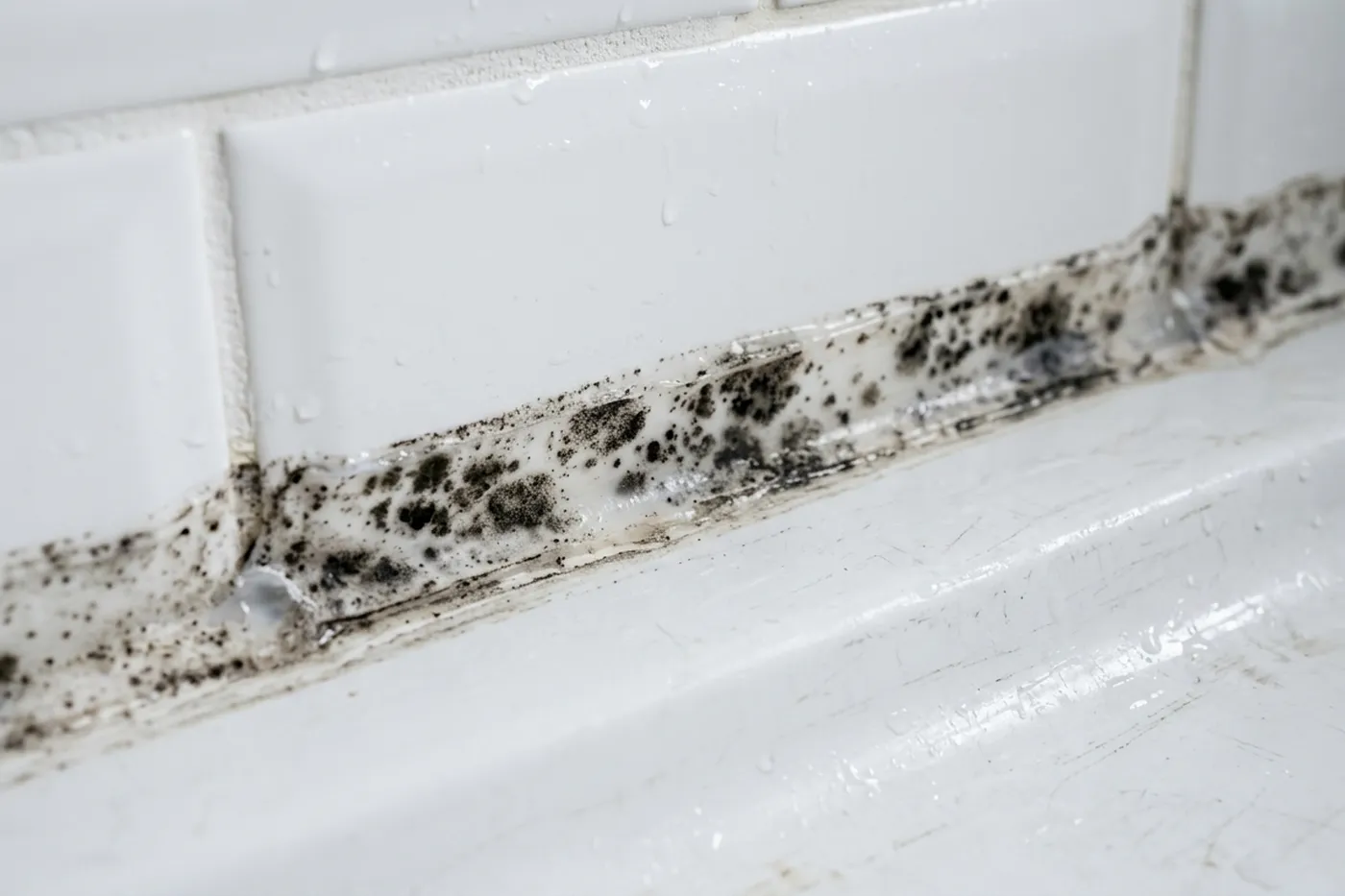
It is eating the soap, not the silicone
Cured silicone itself is not much of a meal. What sits on it is: a film of soap, shampoo, body oils, shower gel and skin, laid down a little more with every use and never quite rinsed off the joint.
That film is the food supply, and a joint that is wet for hours a day keeps it in the condition mould likes. The colony then grows down into the surface of the silicone rather than sitting on top of it, which is why it cannot be wiped, scrubbed or bleached out once it is established.
Bleach reaches the part at the surface and turns the visible black to grey or white. It looks fixed for a couple of weeks. What is under the surface is untouched, and it grows back out.
Why some joints go and others do not
In almost every bathroom, one joint goes first and the others follow years later. It is nearly always the one that stays wet the longest: the internal corner of a shower, the tap end of a bath, the back edge of a tray where a screen drips onto it.
The shape of the bead matters more than people expect. A joint tooled to a clean concave hollow sheds water off itself. A joint left flat, or worse, left with a shoulder standing proud of the tile, holds a thin bead of water along its length after every use. That joint is wet for an hour a day longer than the one next to it, and it goes first.
Ventilation decides the rest. A room where the air changes after a shower dries its joints in twenty minutes. A room with the door shut, no extractor and a window that stays closed keeps them damp for hours, every day, all winter.
What actually slows it down
Use the extractor, and leave it running for a quarter of an hour after the shower rather than switching it off with the light. Most of the water in the air leaves in that window.
Open the window when the weather allows. Wipe the joints down after a shower if you are the sort of person who will actually do it, because that removes the food rather than the moisture, and it works better than anything else on this list.
Sanitary silicone containing a fungicide buys you time. It is not permanent protection and it is not a claim worth making: the fungicide leaches out of the surface over a few years, which is roughly the point at which joints start going. It is what should be used in a bathroom, but it is not a cure for a room that stays wet.
When the joint is not the problem
If there is black spotting on the ceiling, in the corners of the walls, on the window reveal or behind furniture on an outside wall, the joint is a symptom rather than the cause. The room is holding humidity, and a new bead will look clean for a while and then match the rest of the room.
That is a ventilation, heating and insulation question, and it is worth solving in that order: get the moist air out, keep the surfaces warm enough that water does not condense on them, then worry about the sealant. Anybody who resealed that bathroom without saying so has taken your money for something that was never going to work.
Also asked
Related questions
Does anti-mould silicone stop it coming back?
It slows it down. The fungicide in a sanitary grade silicone works at the surface and it depletes over a few years. It is the right material for a bathroom and it is not a permanent answer, and any claim that it is should be treated carefully.
How often should a bathroom be resealed?
There is no schedule worth publishing, because a well ventilated bathroom and a badly ventilated one are years apart. The signal to act is a joint that is discolouring or lifting at an end, not a date.
Will cleaning it every week keep it white?
It helps more than most things, because you are removing the food supply rather than attacking the mould. Wiping the joints dry after a shower does more for them than any spray does.
If you would rather not
The job this article describes, done for a published price
The pages this covers
- Shower resealing
Tray, base, internal corners and the foot of the screen or enclosure resealed properly, with the old joint taken right out. £95 including VAT and silicone.
- Whole bathroom resealing
Bath, shower, basin, screen and every tiled splashback run stripped and resealed on one visit. £185 including VAT and silicone.
The other guides
- Can you reseal a bath or shower without removing the old silicone?
The short answer is no. The longer answer is about what silicone bonds to, and what is living inside the joint you would be covering up.
- How long does silicone take to dry, and when can you use the bath?
Touch dry in under an hour, usable after twenty four. Why those are two different numbers, and what happens if you do not wait.
- Why does bathroom sealant leak, and is the sealant even the problem?
Water on the floor below a bathroom has three usual causes and only one of them is the sealant. Here is how to tell which one you have before you pay for the wrong repair.
- Which silicone should go in a bathroom, and does the type matter?
Sanitary grade, not general purpose. Acetoxy on tile and acrylic, neutral cure on stone and metal. White or clear is a choice, and everything else on the shelf is a distraction.
- How often should bathroom sealant be replaced?
There is no fixed interval. There are four signs, and a family bathroom gets through a joint considerably faster than a spare one does.
Get a price
Book a reseal with Exeter Silicone Services
Send a photograph of the joint and say which fittings need doing. Back comes the price off the published card and the next free slot. Ringing is quicker if you want a date fixed today.
- Bath or shower
- £95
- Both on one visit
- £150
- Whole bathroom
- £185
VAT and silicone included. Minimum charge £95.